

The Importance of Justice
On justice and the God of Scripture:
The Bible makes it clear that justice is a major attribute of God. Numerous texts declare this. In Psalm 89:14 for example we find these words: “Righteousness and justice are the foundation of your throne; steadfast love and faithfulness go before you.” Or as is plainly stated in Isaiah 30:18: “The Lord is a God of justice”.
Simply looking at just one biblical book will give you plenty of relevant passages. Proverbs speaks much to this, especially in terms of good and bad leaders. Consider these 15 passages from the book of Proverbs:
When the wicked perish there are shouts of gladness. (11:10)
He who justifies the wicked and he who condemns the righteous
are both alike an abomination to the Lord. (17:15)
The wicked accepts a bribe in secret
to pervert the ways of justice. (17:23)
It is not good to be partial to the wicked
or to deprive the righteous of justice. (18:5)
A worthless witness mocks at justice,
and the mouth of the wicked devours iniquity. (19:28)
Unequal weights and unequal measures
are both alike an abomination to the Lord. (20:10)
Unequal weights are an abomination to the Lord,
and false scales are not good. (20:23)
To do righteousness and justice
is more acceptable to the Lord than sacrifice. (21:3)
When justice is done, it is a joy to the righteous
but terror to evildoers. (21:15)
These also are sayings of the wise.
Partiality in judging is not good.
Whoever says to the wicked, “You are in the right,”
will be cursed by peoples, abhorred by nations,
but those who rebuke the wicked will have delight,
and a good blessing will come upon them.
Whoever gives an honest answer
kisses the lips. (24:23-26)
Evil men do not understand justice,
but those who seek the Lord understand it completely. (28:5)
A ruler who lacks understanding is a cruel oppressor,
but he who hates unjust gain will prolong his days. (28:16)
To show partiality is not good,
but for a piece of bread a man will do wrong. (28:21)
By justice a king builds up the land, but he who exacts gifts tears it down. (29:4)
Many seek the face of a ruler,
but it is from the Lord that a man gets justice. (29:26)
Understanding justice in Proverbs
While the concept of justice is a broad one, often it is tied in with things like righteousness, and even retribution. Justice has to do with giving each person what he or she deserves – about folks getting their just deserts. So the notion of rewarding the good and punishing the bad is frequently found here.
Some helpful remarks by several experts can be offered here. Old Testament scholar Bruce Waltke in his NICOT commentary on Proverbs says this:
Faith in God’s sovereignty and in divine retribution makes one wise. “Only a transcendent God,” says Bostrom, “can be entrusted with the ‘impossible’ task of dispensing justice to each individual and situation!” All agree that Proverbs presents a “world order” involving “deed and destiny,” that is to say, “What you do now will determine what will happen then.” A more precise formulation is a character > conduct > consequence connection—that is, what you are determines what you will become. At issue here is the relationship of the LORD to this nexus. (p. 73)
He continues:
The conclusion can now be drawn that it is more appropriate to speak of personal divine retribution in Proverbs than of an impersonal world order. The sages believed in and taught a harmonious world order created and sustained by the LORD, but not an impersonal one. In that world order justice will finally be meted out, but they assign that justice to the LORD without specifying the time or the manner. These texts sometimes seem to assume that society’s social and legal safety nets for the welfare of the oppressed have failed. They assert only that, although human intervention on behalf of the helpless may fail, the LORD will not fail, without spelling out the method or process of divine retribution (23:10-11). Moreover, they do not assert that divine retribution operates like clockwork. Statements like 11:5-6 need to be qualified by other proverbs, not by claiming that they are too optimistic and/or exaggerate the truth? There are many counterproverbs that nuance their radical thrust by asserting or implying that the doctrine of divine retribution also involves divine inscrutability. For some people and for some times the divine order of retribution seems overturned. The righteous may now live in a topsy-turvy, turbulent world. I will discuss this theodical problem and God’s rewards of life, health, and prosperity below. (pp. 75-76)
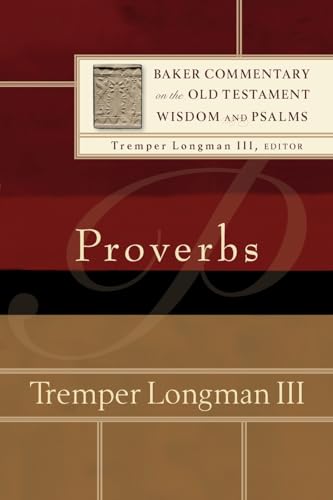

And Tremper Longman in his BCOTWP commentary offers these remarks:
A number of questions are raised by the rewards and punishments of the proverbs. The first is the agency of the punishment, while a second important one is whether they are true to life.
With regard to the first question, while in Proverbs good things happen to good people and bad things happen to bad people, rarely is the agent of the blessing and punishment named. Sometimes the connection between act and consequence is just stated, with no mention of how it will happen. In the case of a text like 21:7, it seems as if the evil acts themselves will boomerang back on evildoers. They reap the consequences of their actions. In 18:6, the very words of fools will result in their pain. Interestingly, a text like 24:16 reveals that the sages understand that bad things will happen to good people; the righteous are said to stumble and more than once. However, they, as opposed to the evil, will get up again. In other words, the bad things that happen to good people are simply temporary setbacks. They are, after all, on a road that ends in life.
On the other hand, a text like 16:5, though it doesn’t make a direct connection, certainly leaves the impression that Yahweh has something to do with the punishment. The fact that the act is an abomination to Yahweh leads to the punishment. Finally, there are passages that do make a connection between Yahweh and reward and punishment:
For the one whom Yahweh loves he will correct, even like a father who treats a son favorably. (3:12)
The curse of Yahweh is in the house of the wicked, but he blesses the home of the righteous. (3:33)
Yahweh will not let the righteous starve, but he will push away the desire of the wicked. (10:3)
So there are texts that lead us to think that the act of the wicked will come back to haunt them and those that imply or directly connect Yahweh to the rewards and punishments that come on people. However, the two are not really different. The former may imply that Yahweh will see that people get what they deserve. Perhaps the best way to think of it is that Yahweh built the world in such a way that punishments are inherent in bad actions and rewards in good actions. Yahweh is ultimately behind all consequences. As Bostrom puts it, “Our investigation … has led us to the conclusion that the world view of the sages was neither built upon a concept of an impersonal order nor of actions with ‘automatic,’ built-in consequences, but on the active participation of the Lord in the affairs of men in conjunction with man’s own responsibility.”
However, this raises an even more troubling question: Is Proverbs’ teaching on retribution true? Is it really the case that good things happen to good people and bad things happen to bad people? The question may be most pointedly stated with reference to 10:3. If Yahweh does not let the righteous starve and pushes away the desire of the wicked, why does it appear as if some godly people go hungry and even die of starvation while some wicked people are fat and happy?
This raises the question of whether it is correct to consider the threats of punishments and the anticipation of rewards as promises or guarantees. Is Proverbs saying that whoever acts in a wise way will definitely and without fail be wealthy, healthy, and happy? And will the one who acts foolishly always be poor, sickly, and sad?
The answer to this important question is no. It is in the nature of the proverb not to give promises but rather to indicate the best route toward reward—all things being equal. We illustrate what we mean here by an examination of a commonly abused proverb, 22:6:
Train up youths in his [God’s] path; then when they age, they will not depart from it.… (pp. 83-85)
So one needs to look not just at the book of Proverbs but the rest of biblical revelation to seek to get the full biblical picture on how we are to understand things like justice, retribution and rewards and punishments.
Justice, mercy and the New Testament
I have discussed the terms found in this subheading elsewhere, so I will be brief here. The Old Testament conception of justice is also found in the New Testament. Supremely, we see the justice of God being vindicated in the death of his Son, so that those who come to him in faith and repentance can experience the mercy of God instead of what they deserve. See Romans 3:21-31 for how we are justified freely by his grace through faith.
For a bit more on justice and retaliation and vindication, see here: https://billmuehlenberg.com/2011/03/06/on-god%e2%80%99s-justice/
For further commentary on retributive justice, see these two pieces: https://billmuehlenberg.com/2022/02/07/lex-talionis-and-the-old-testament/
https://billmuehlenberg.com/2022/02/07/lex-talionis-and-the-new-testament/
How biblical justice differs from modern notions of social justice I discuss often, as in this article: https://billmuehlenberg.com/2021/04/03/social-justice-or-scriptural-justice/
And see this piece on how justice and mercy cohere: https://billmuehlenberg.com/2015/02/21/difficult-bible-passages-james-213/
One final point, tying in the current Lindsay Clancy murder case in Massachusetts. Justice presumes people take personal responsibility for their actions. Millions of people with genuine mental health issues who are seeking help for it do NOT murder their own young children. Justice looks at the victims, not just the perpetrators of crimes. But more on that in a future article.
[1687 words]
